










How your cells “talk”
For your body to function properly, your cells must be in constant communication, sending messages for everything from when to eat to how to adjust your eyes to light to how to form a scab when you skin your knee.
Cells send and receive these signals through multiple pathways, which are a series of reactions that help you respond to the world around you.
Think of a pathway like a relay race in which each runner has a specific job to do to help get to the finish line.
The IL-36 pathway
One pathway in the immune system that helps manage inflammation is the interleukin-36, or IL-36, pathway. The job of this pathway is to help protect the body from injury or infection.
This “relay race” tells the cells needed to heal a wound or fight infection to move into action.
In people with GPP, the IL-36 pathway is out of balance, which can cause these cells to overreact. This causes inflammation throughout the body.
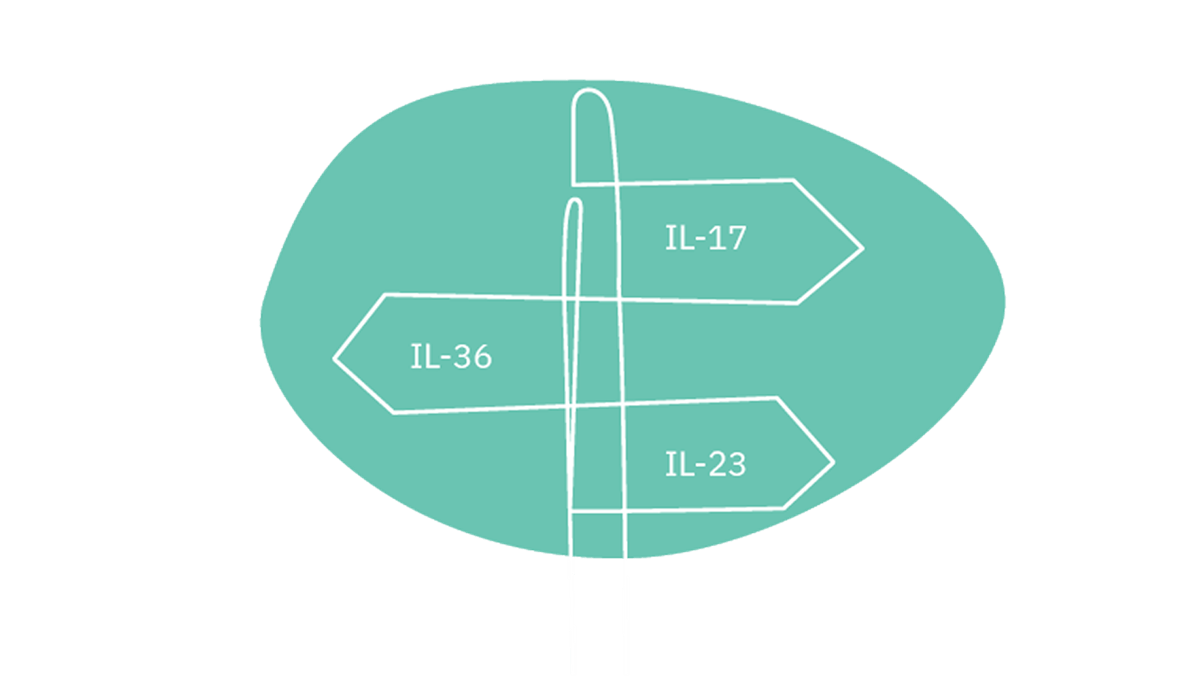
Other conditions, such as plaque psoriasis, are primarily caused by different pathways like IL-17 or IL-23.
These pathways involve different cells in the body.
Ongoing treatment for GPP
To help address GPP symptoms, it’s important to address the cause: ongoing inflammation throughout the body.
Systemic treatments — or medicines that move throughout your body — are designed to help control inflammation. In GPP, you may hear systemic treatments be called “biologics,” which means they are made from natural molecules such as proteins. Your dermatologist may also recommend moisturizing creams or hydrotherapy to help ease discomfort on the skin.
It’s important to treat your specific condition — being proactive with your doctor to ask about all your options can help you find a care plan that works best for you.
The importance of continuous treatment
Hear from Dr Chovatiya why ongoing treatment matters in GPP

“I have a firm belief that flares need to be controlled, and the underlying GPP needs to be chronically managed.”

